Designed the online enrolment for a gold savings scheme
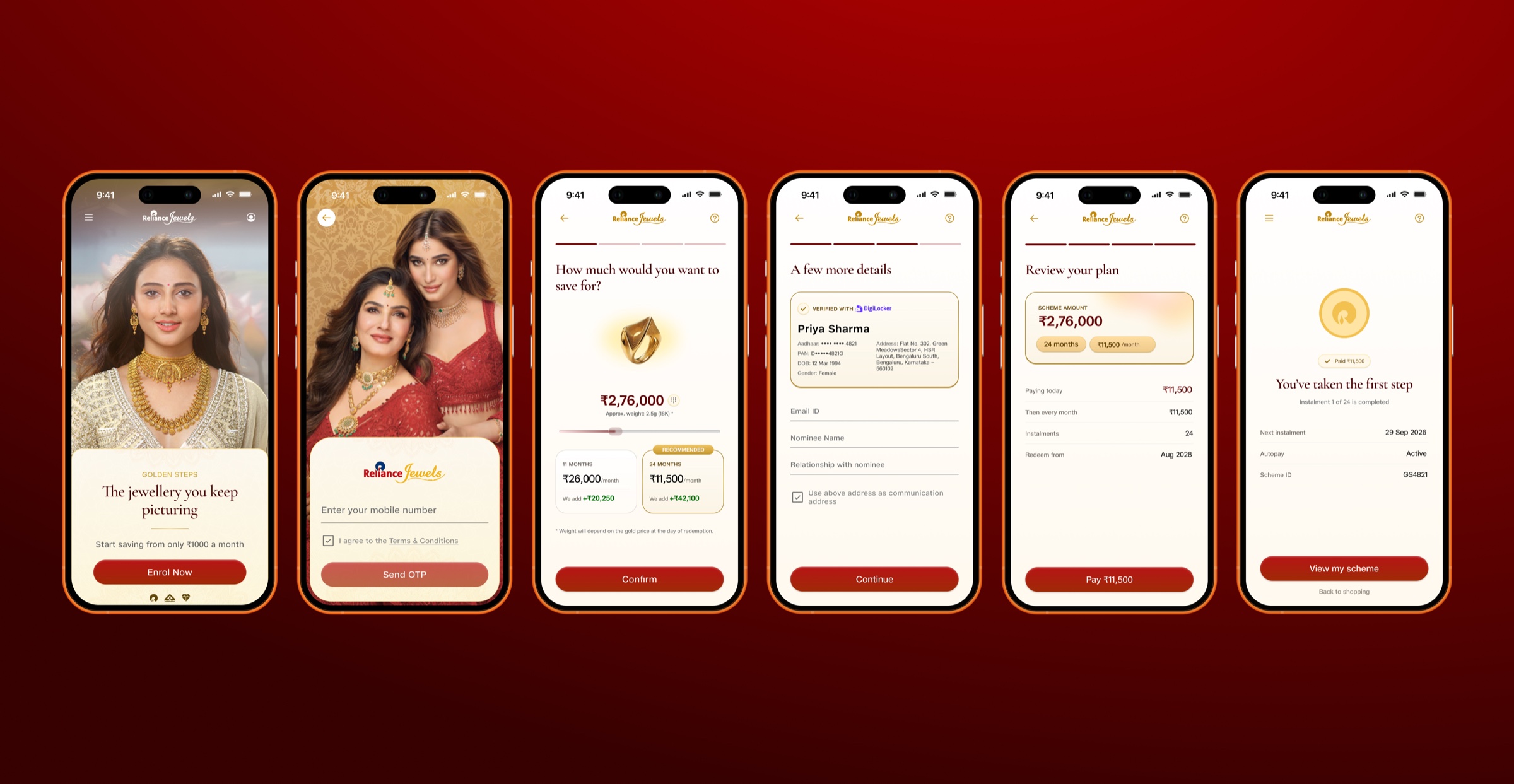
Reliance Jewels is a jewellery chain. Their savings scheme lets you pay a bit every month and later swap the pot for jewellery, and until this project you could only join by walking into a shop. I put it online. Then I built the dashboard that showed me 91% of people were quitting on a screen I had drawn.
- What it is
- You pay a bit every month, then spend the pot on jewellery
- What I owned
- The enrolment flow and the dashboard. I was the only designer.
- Who it was for
- Shoppers on their phones. Later, leadership and the support team.
- What changed
- A channel that did not exist now earns ₹80 Cr a year
- Problem
- You could only join inside a store, on a working day. And once it was online, nobody could tell how it was doing, because the numbers sat in four different systems.
- My move
- I put the enrolment online and ordered the steps around what a person worries about, not what the systems wanted. Then I turned the 7 questions leadership kept askinginto the 7 cards of a dashboard.
- Outcome
- A way to join that did not exist now does ₹80 Cr a year, and four places to look became one. Three other internal tools now use the chart components I drew for it.
- Learning
- The dashboard found my own worst screen, a launch too late. Test the step you think is easy.
The half of the business nobody had built for
Buying a necklace is one visit. A savings scheme brings the same person back every month for a year.
Reliance Jewels earns money two ways. The website sells jewellery outright, which is a big amount, once. The Gold Savings Scheme is the other way. You pay what you can afford each month, and later you walk out with jewellery worth the whole pot. It makes starting cheaper, and it brings the same person back to the counter every month.
That second way is worth protecting, and it had the least built around it.
How Reliance Jewels earns
E-commerce
High-ticket jewellery, bought outright. One purchase, one customer, one day.
Gold Savings Scheme
This caseMonthly instalments redeemed for jewellery later. Recurring revenue, repeat relationships.
You could only join by walking into a shop
Everything the salesperson did by standing there now had to be done by a screen.
The salesperson was doing more than selling. A person in front of you says the scheme is real, answers the awkward question about what happens if you miss a month, and watches you sign. That is where the trust was coming from, and none of it was written down anywhere.
To join the scheme you went to a Reliance Jewels store. A salesperson took you through the durations, you filled in a form, you paid the first instalment at the counter. Then you came back and paid again, month after month, until the scheme matured.
That works if there is a store near you and if you can reach it on a working day. For everybody else the scheme may as well not have existed. My brief was to build the online version, and there was nothing to redesign, because online there was nothing.
Which is a harder problem than it sounds. Someone who had never met the salesperson now had to understand a savings product, prove who they are to the government's satisfaction, sign a legal document and hand over money. On a phone. On their own.
So the screens had to carry what the salesperson had been carrying. I ordered the flow the way a person's worries actually arrive, which is not the order the backend systems would have picked. I had a guess about which part mattered most, and I was wrong. It took the dashboard to show me that.
Two of the five steps were never going to be mine
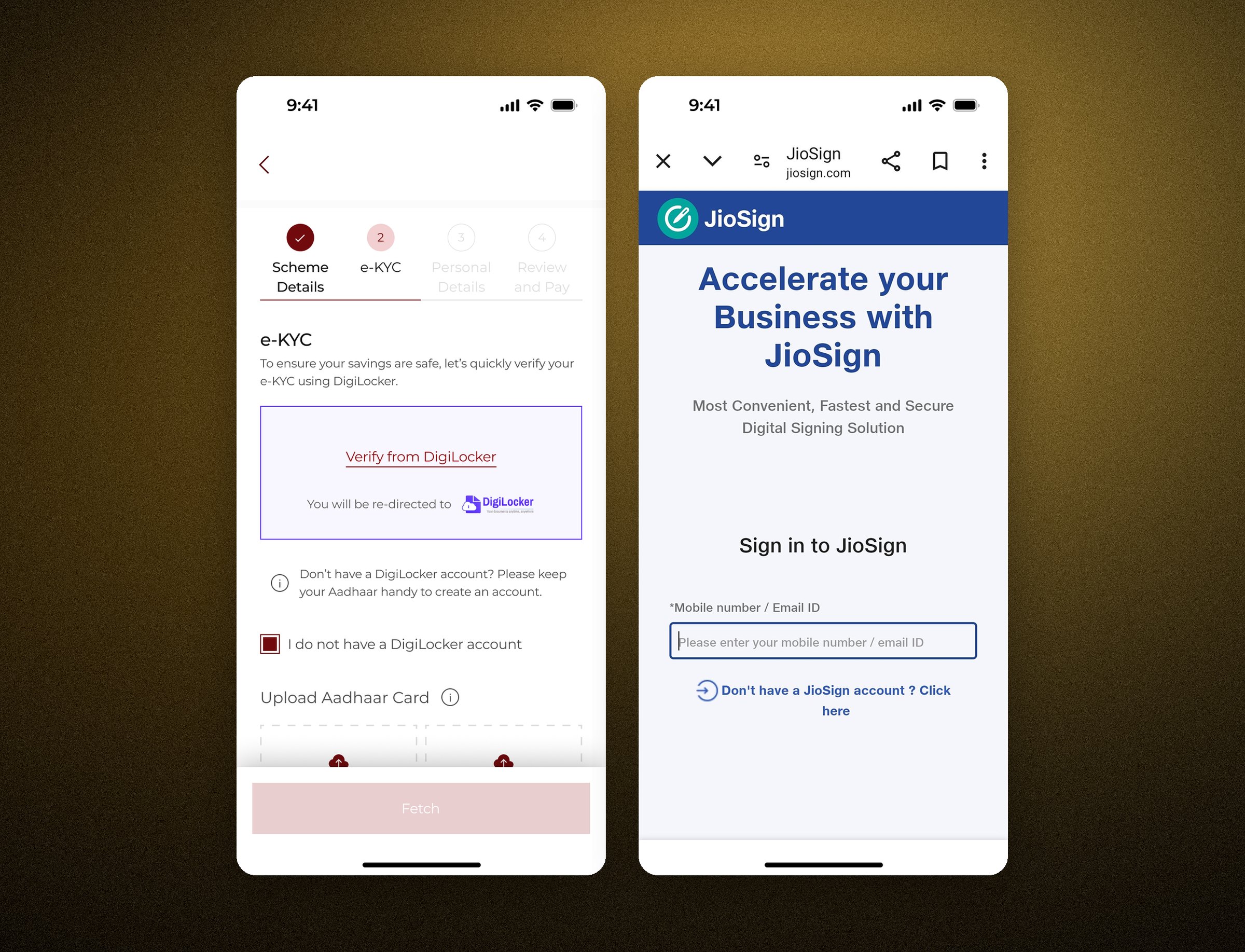
A savings product in India has to check your identity against a government ID, and it has to take a legal signature. Ours does the first through DigiLocker, the government's own document wallet, and the second through JioSign. Both are somebody else's page, a different shade of blue to ours, and neither is a screen I could design. What I could do was stop them feeling like the site had broken. Before each jump the screen names who you are about to be sent to, shows their logo and says what to keep handy, so the unfamiliar page arrives as a step you were warned about rather than a redirect you did not ask for.
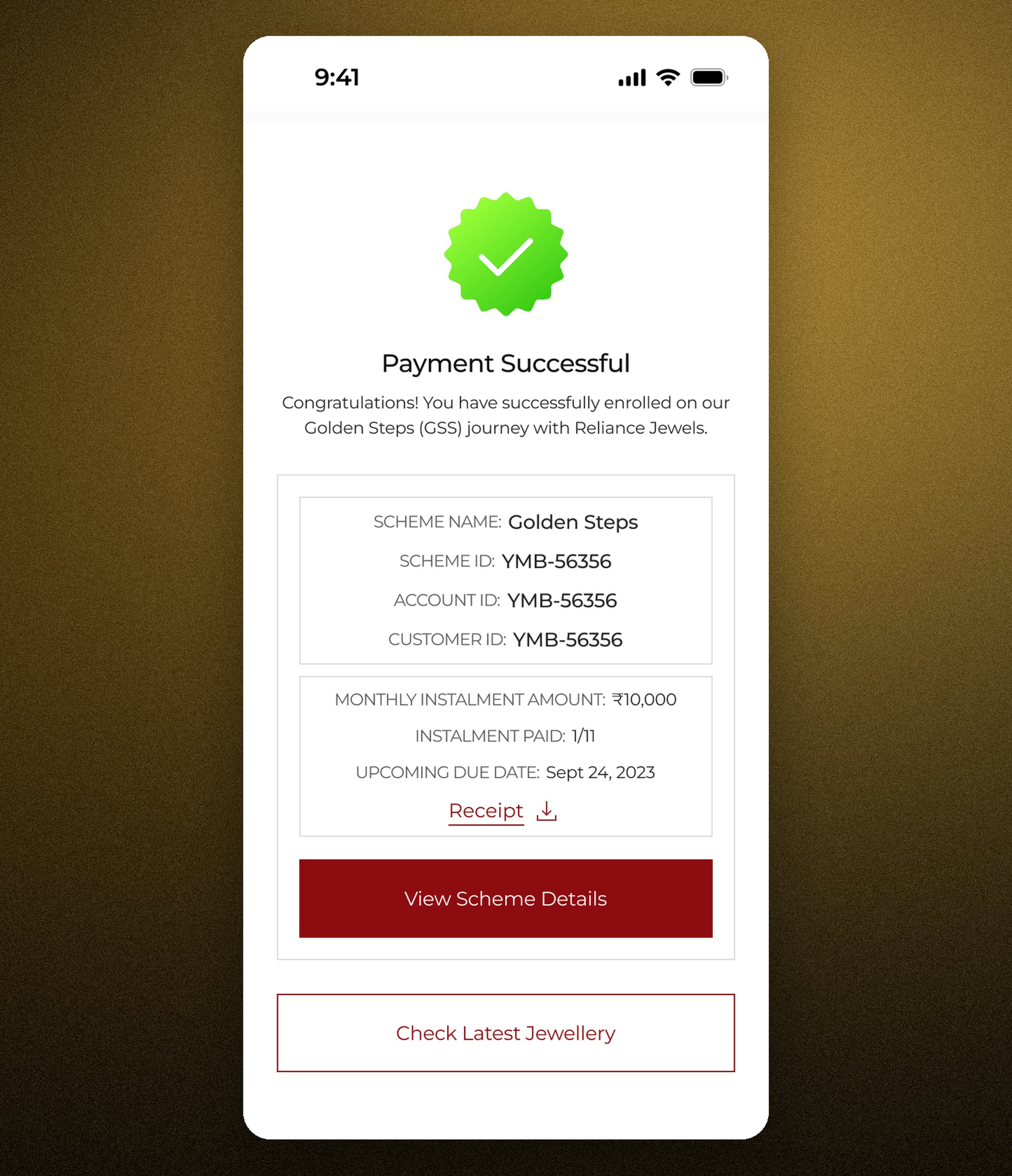
It went live, and the channel now brings in ₹80 Cr a year. End to end, 7.1% of everyone who tapped Enrol Now came out the other side having paid.
On its own 7.1% looks like a broken funnel, so here is the rest of it. There was no online enrolment before this, so the baseline is zero, not some earlier number I improved on. And this is not a one-tap purchase. Somewhere in the middle a person is asked for their Aadhaar, India's national ID, and a signature on a commitment that runs for months. 7.1% of them finished anyway.
Then the question changed. It was no longer whether people could do this on a phone. It was how the whole thing was doing, and nobody could answer that.
Four teams, four different sets of numbers
Nobody had the whole picture, so decisions went to whoever spoke last.
Every number about the scheme already existed somewhere. Product saw part of it in Google Analytics, the backend systems held the payments, marketing tracked its own campaigns and customer support dealt with missed instalments in a spreadsheet of their own. Each team had a piece and nobody had all of it.
So roadmap calls ran on whoever remembered the loudest story. Drop-offs turned up weeks late, and failed payments leaked money nobody was watching.
Before · four places to look
Google Analytics
funnels, traffic
Backend systems
payments, schemes
Marketing
campaign numbers
Customer support
missed payments
One view · the 7 questions answered
After · one place to decide
The spec was a list of questions
I started from the questions leadership kept asking.
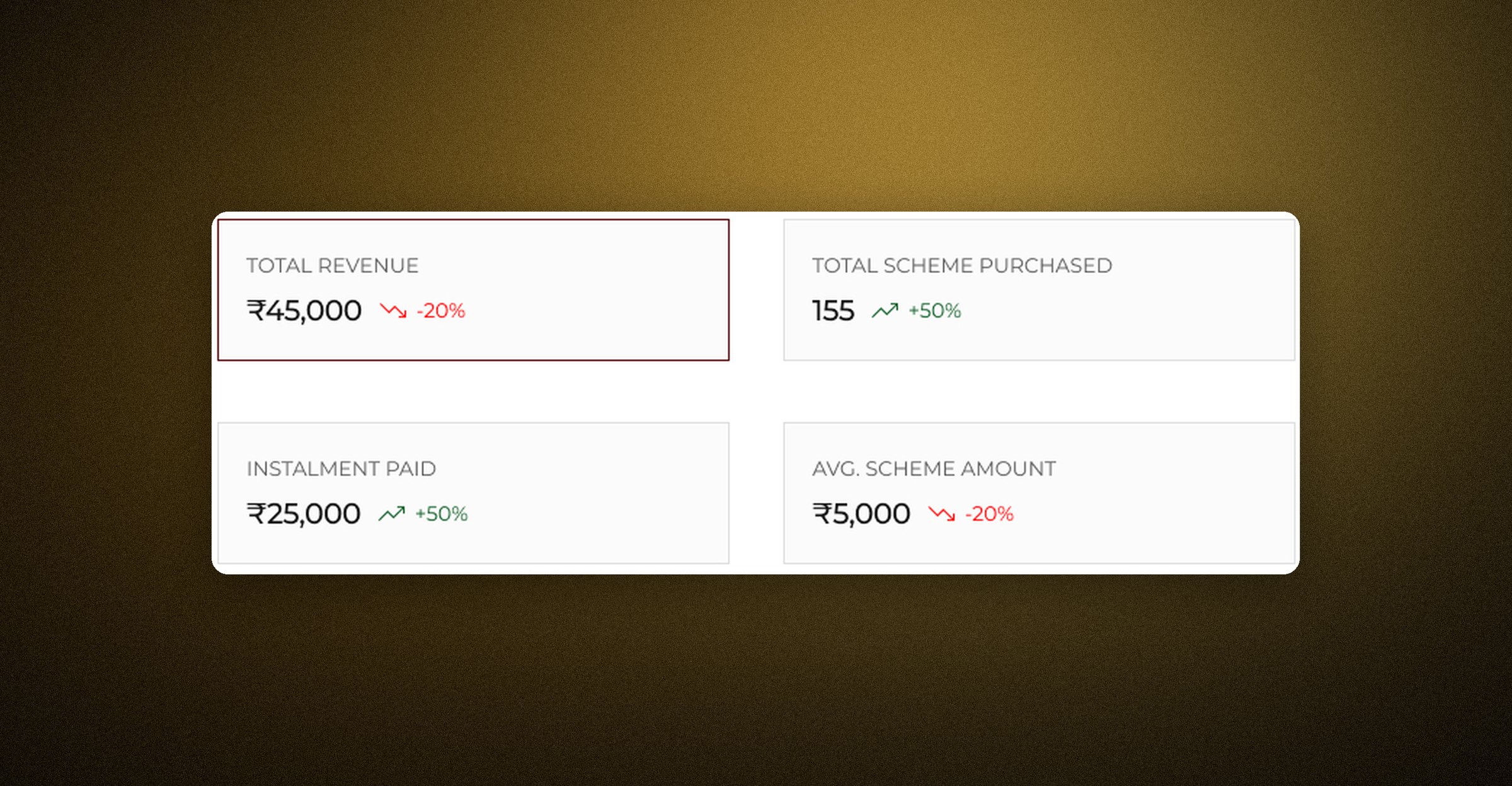
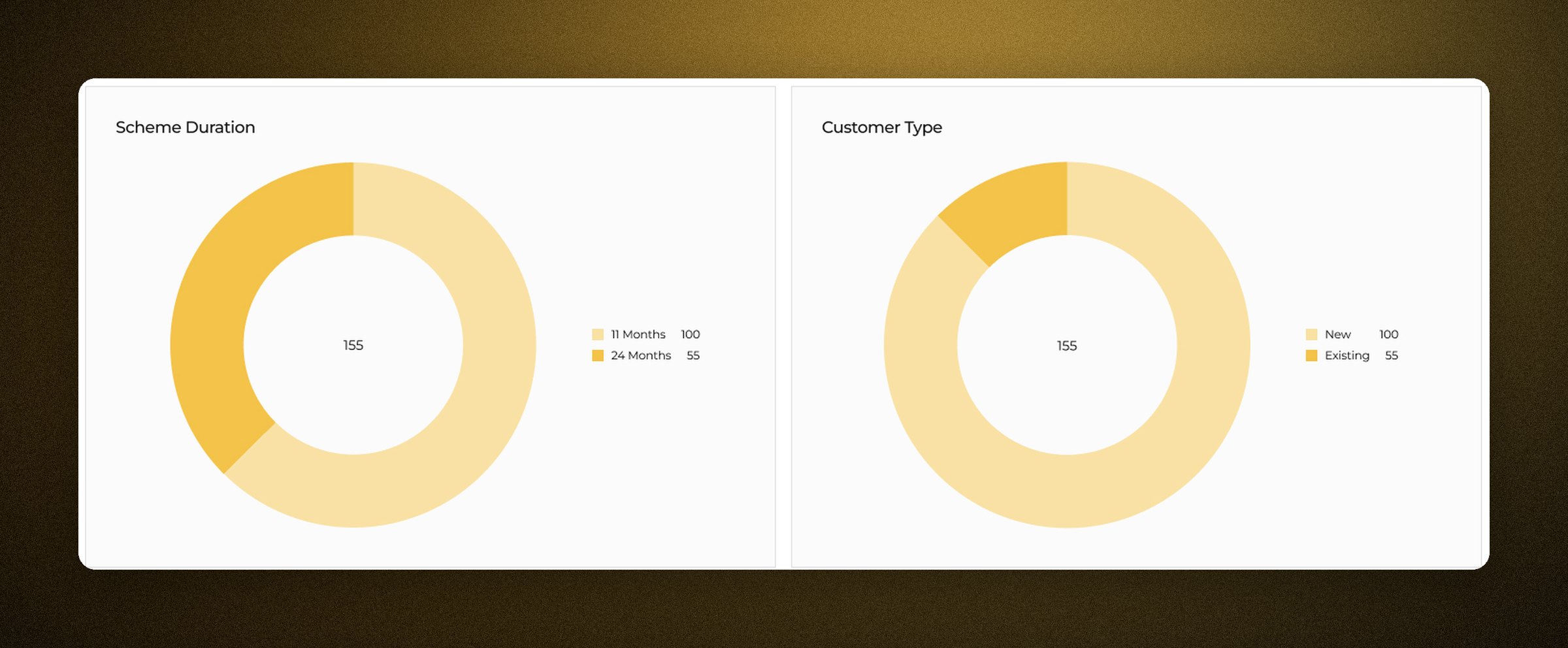
Before opening Figma I sat with the PM and made a list. Not the metrics we could pull. The questions that kept coming up in reviews and never got a clean answer. What did we earn this month, and is that up or down? Where exactly do people abandon enrolment? Who has stopped paying, and why? Seven questions kept returning, so seven became the spec. Every card on the screen answers one of them, and anything that answers none of them stayed off.
How much did we grow month over month?
→ Total revenue and month-on-month growth
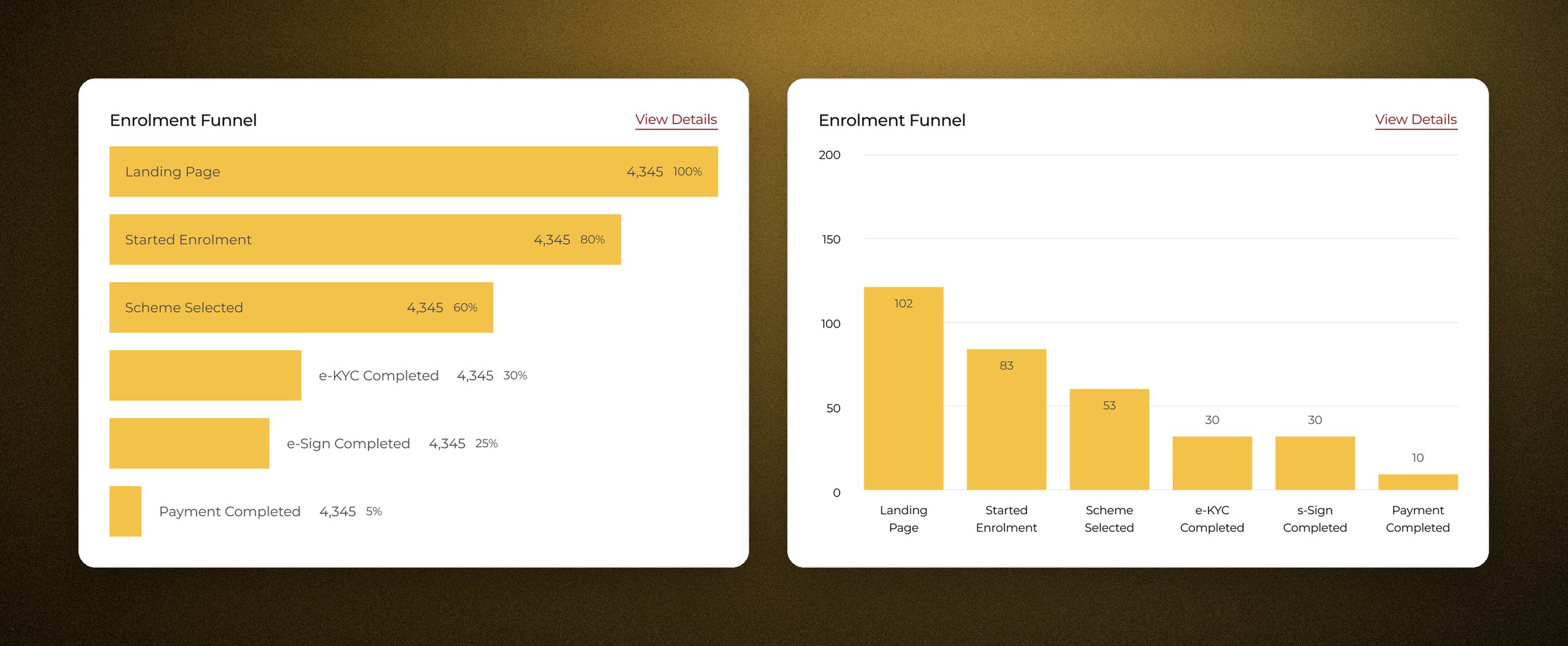
Where are customers dropping off?
→ Funnel drop-off analysis
Are instalments being paid on time?
→ Payment status tracker
Which categories are redemptions flowing into?
→ Redemption categories
Which scheme durations are most adopted?
→ Duration distribution
What is the ratio of new versus existing customers?
→ Retention ratio
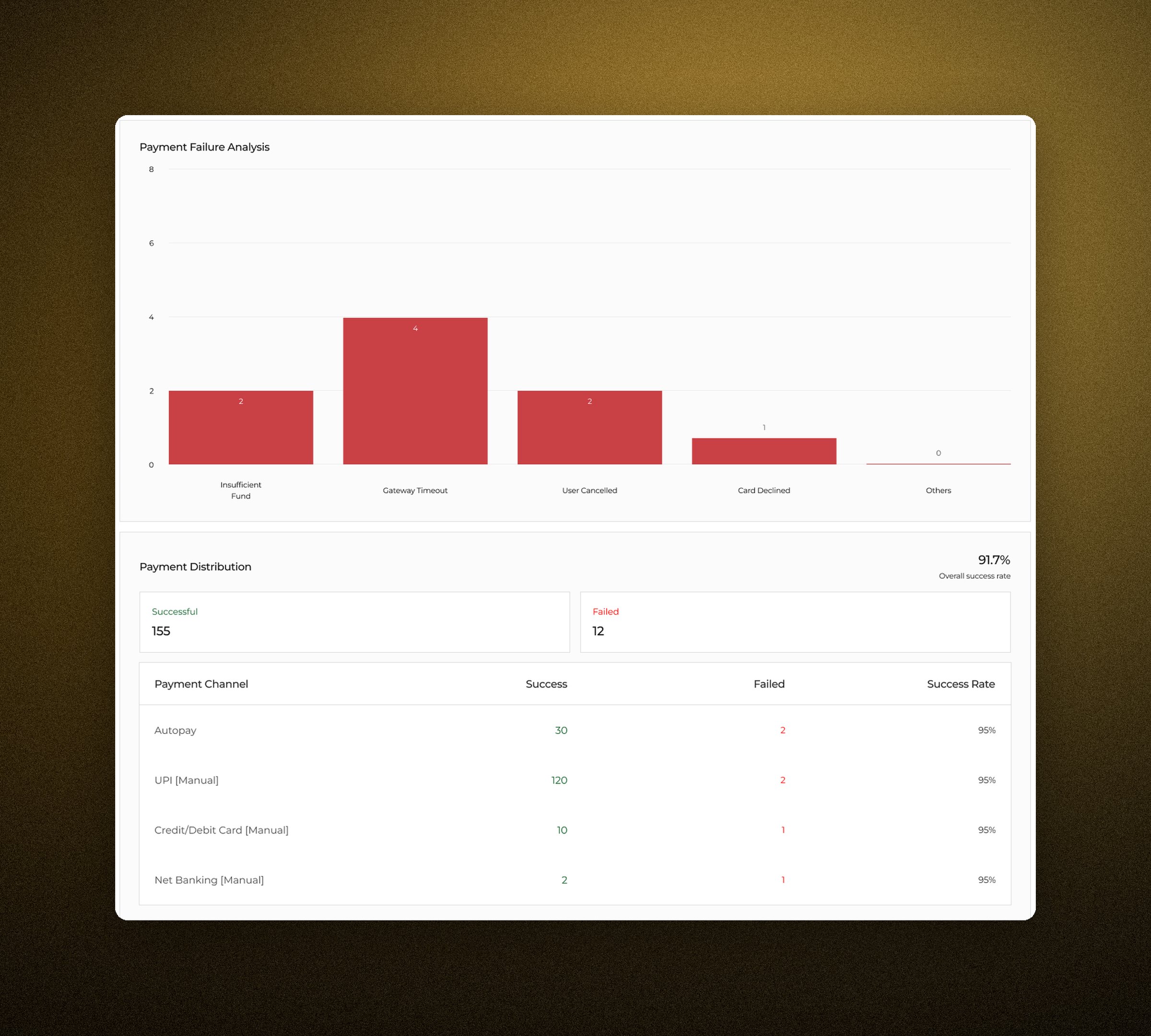
Why are payments failing?
→ Failure reason logs
The calls that made people open it
Ship only what changes a decision, and give every number a next move.
Adoption over complexity
There were fancier options on the table: predictive models, cohort deep-dives, forecasting. We deferred all of it. Leadership opens a dashboard between two meetings, and a first screen that needs a tutorial stops getting opened. A dashboard nobody opens changes nobody's mind, so the first release shipped the seven answers and nothing else.
- Revenue, and whether it is up or down
- Where people abandon enrolment
- Who has stopped paying
- What people redeem, and for how long they save
- Predictive models
- Cohort deep-dives
- Revenue forecasting
Gold for data. Red only for bad news.
The brand's primary colour is red. On a money product red reads as loss before it reads as brand, so the charts run on the gold secondary palette and the dashboard stays calm at a glance. Red is saved for the payment failure chart, where the news genuinely is bad.
Every number ends in an action
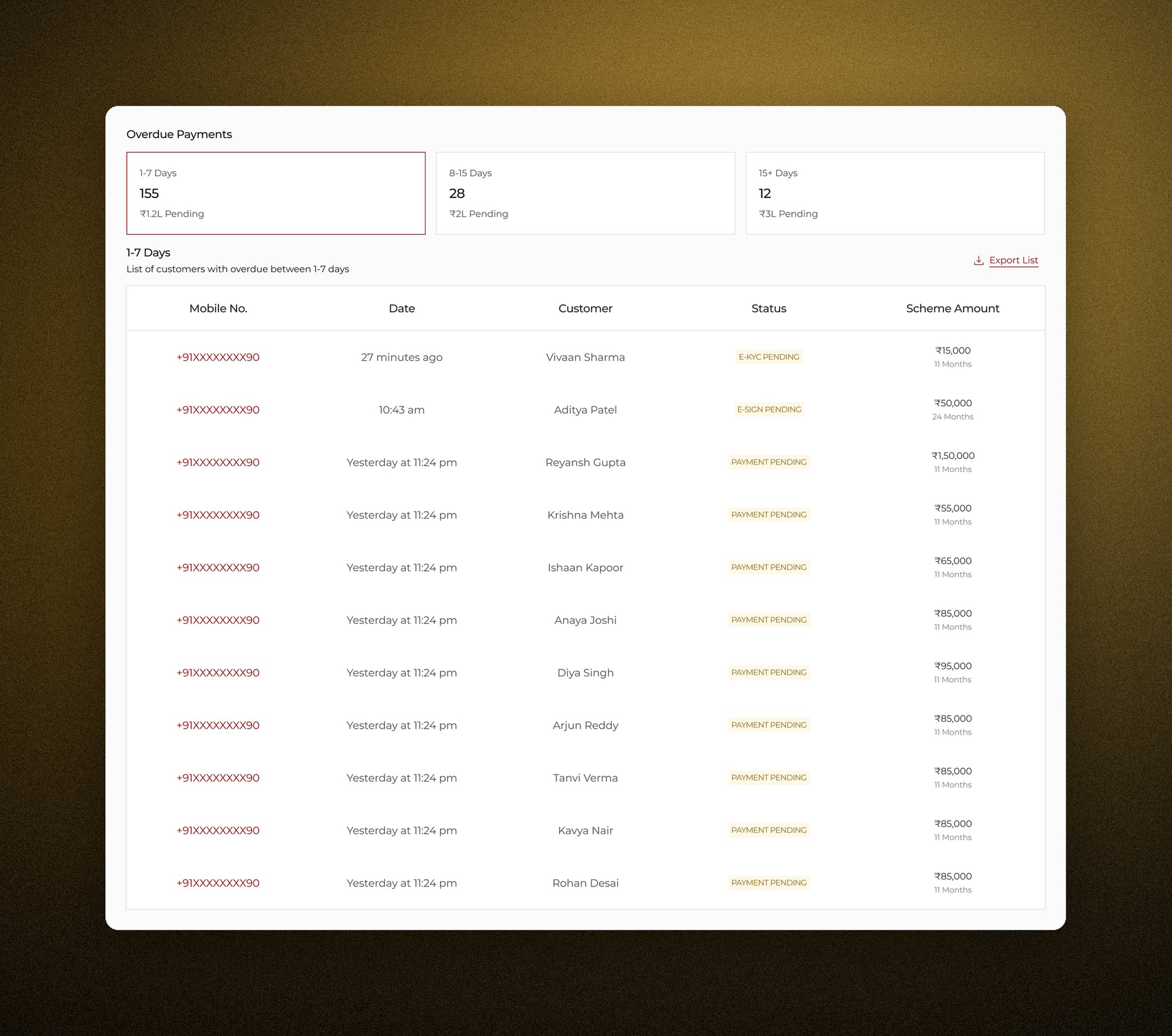
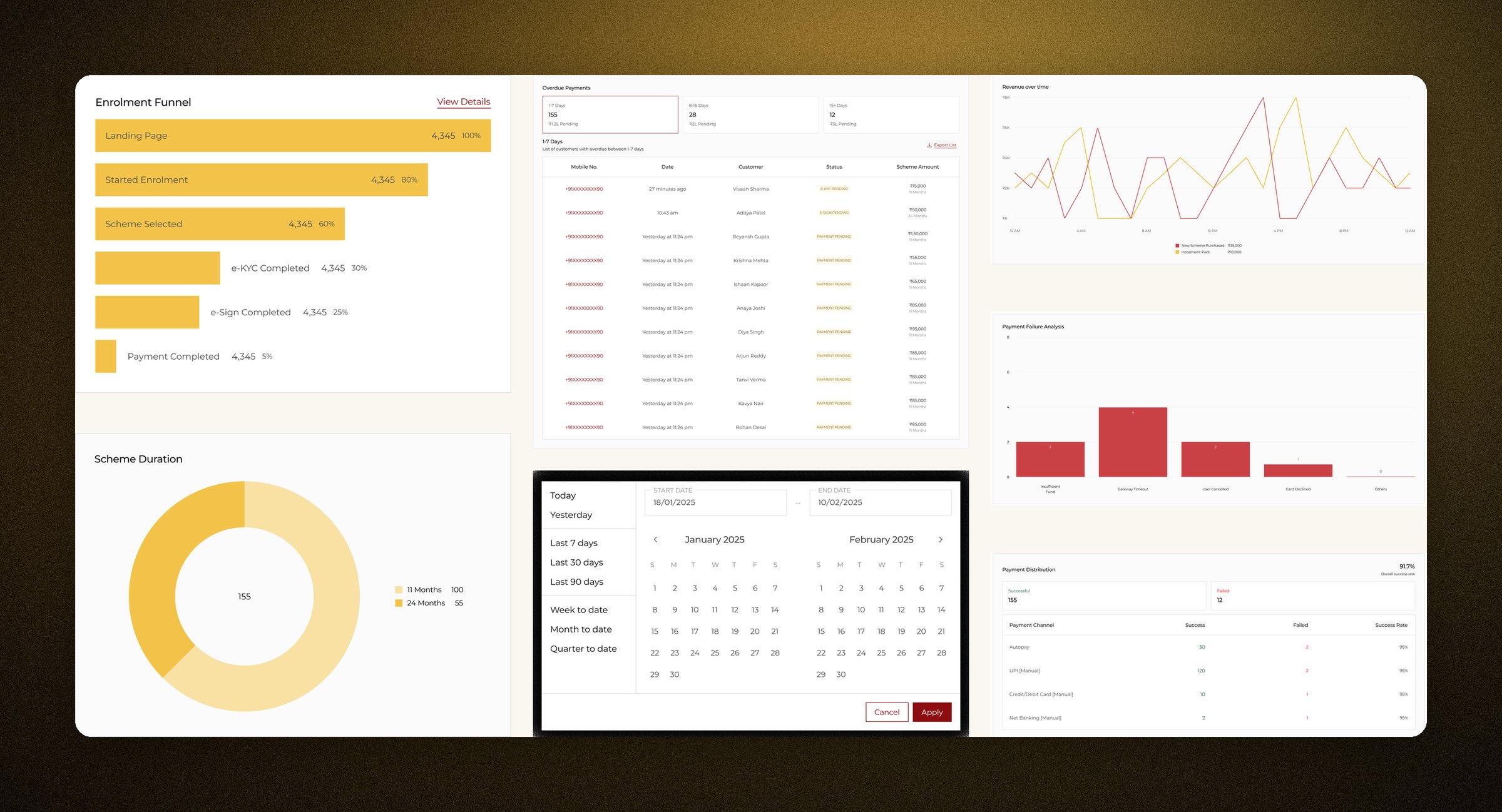
A stat that changes nobody's Tuesday is decoration. So each view is built around what a team does next. The funnel names the exact step where people abandon enrolment, which tells marketing where to intervene. Overdue instalments are grouped by how late they are, so the support team works the riskiest bucket first instead of scanning a flat list. And every bucket exports straight to a call sheet.
 123
123- 1Overdue instalments grouped by how late they are, with the amount pending in each bucket.
- 2Status says where each payment stalled: the identity check, the signature or the payment itself.
- 3Export List turns the bucket into a call sheet for the day.
The date picker matches how people ask
Nobody in a review asks for the eighteenth of January to the tenth of February. They ask what last month looked like, or this quarter so far. The date picker leads with exactly those phrases, presets first, keeping the custom calendar one step behind for the rare precise pull.
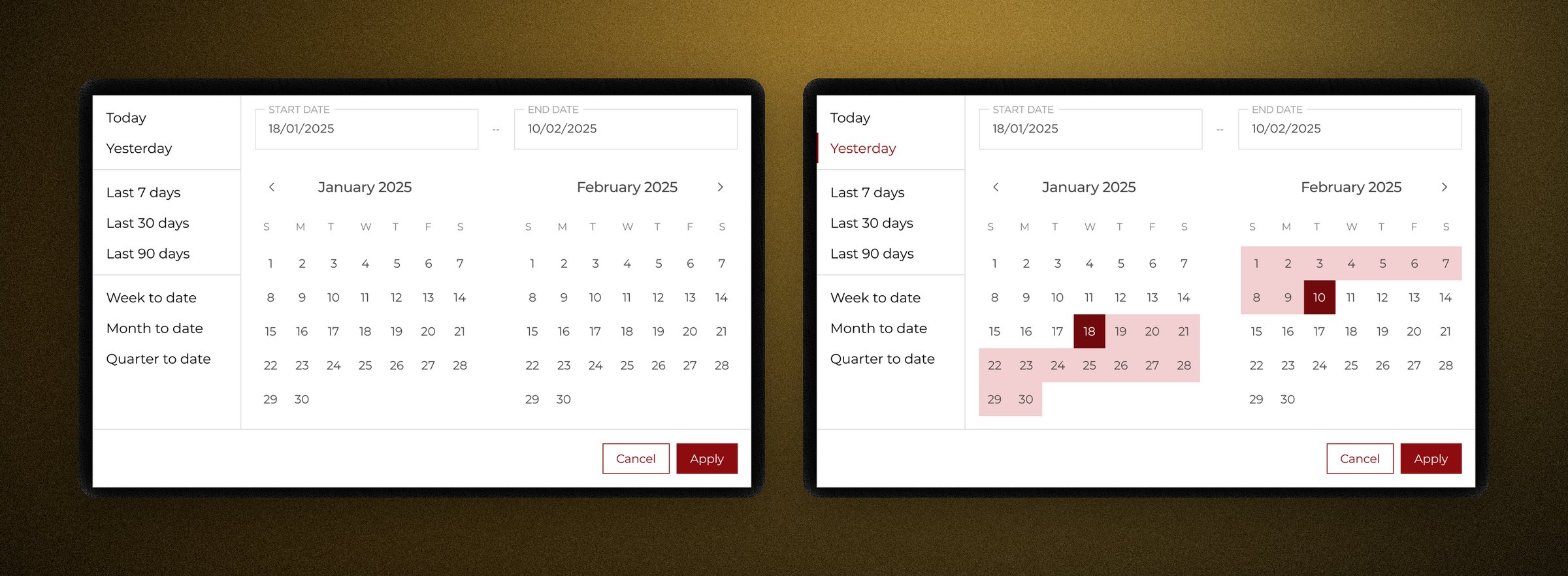
The design system had no way to show data. So I built one.
- No chart of any kind
- No way to pick a date range
- Nothing that held a dense table
- Charts small enough to reuse anywhere
- On the type and colour already in the system
- Documented, so the next team takes them off the shelf
The funnel card's first finding was about my own screen
91% never got past the step I would have called the easy one.
The funnel card was the one I had argued hardest for. It was also the one that came back for me.
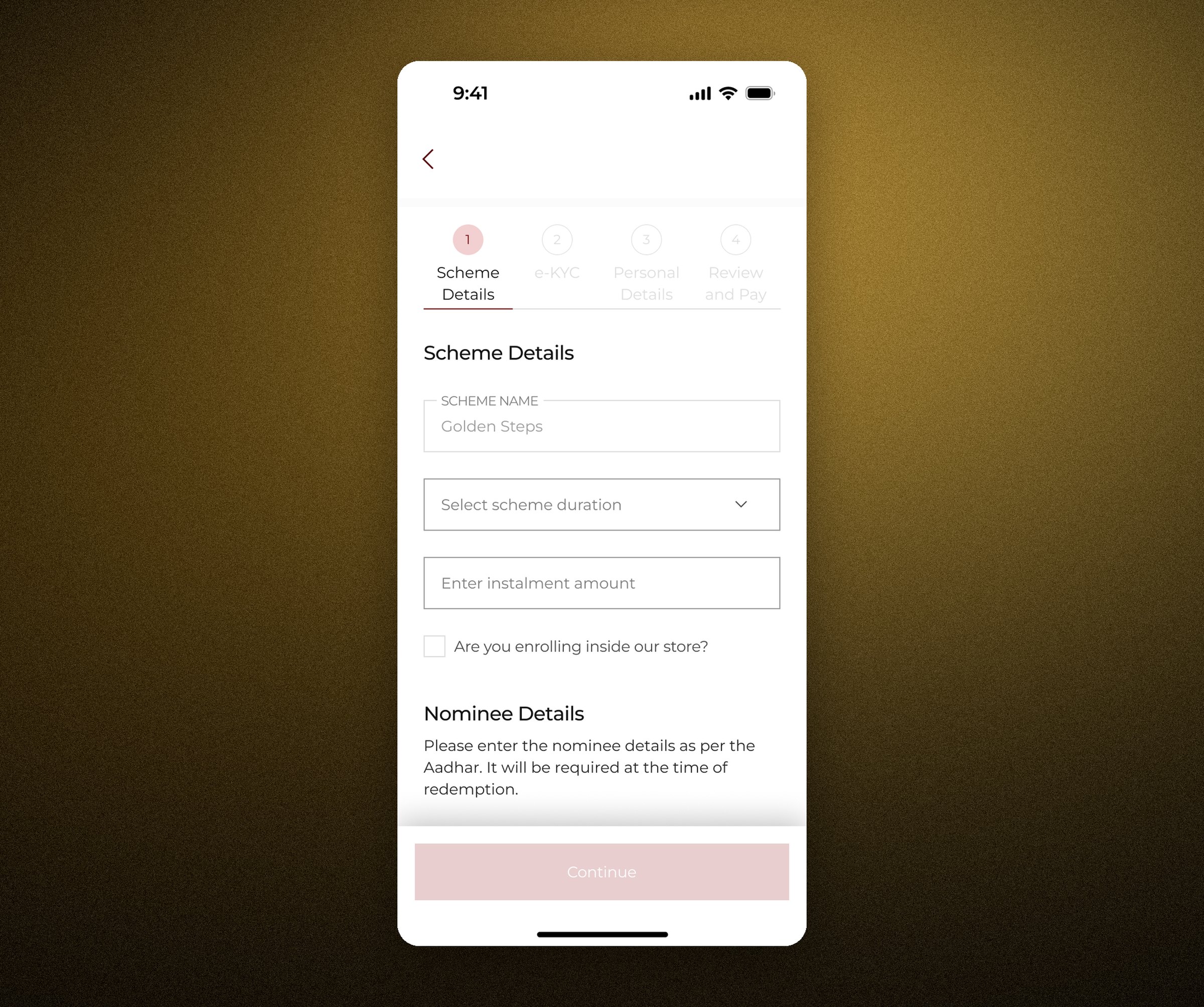
Of everyone who tapped Enrol Now, 91% never got past the first screen. Not the KYC, not the signature, not the payment. The step where you pick a duration and type an amount.
I had drawn that page with the salesperson still in my head. Pick a duration, pick an amount, easy. And in a shop with someone explaining it, it is easy. On a phone it is a sum you have to do before you know whether you want the thing at all, asked by a company you have not decided to trust yet. What sits below it is worse. A nominee, and a question about whether you happen to be standing in a store right now.
So I went back into that one step and rebuilt it around what the funnel and the follow-up research showed. The rebuilt version has not had its second read yet.
 1234
1234- 1Four steps of commitment on show before you have chosen anything.
- 2Pick a duration. In the shop this is the bit the salesperson talks you through.
- 3Then type an amount, with nothing on screen doing the maths alongside you.
- 4Nominee details, asked before the person has committed to a thing.
A way to join, and one place to watch it
Three other internal tools adopted the chart components without being asked to. That's the proof I trust most.
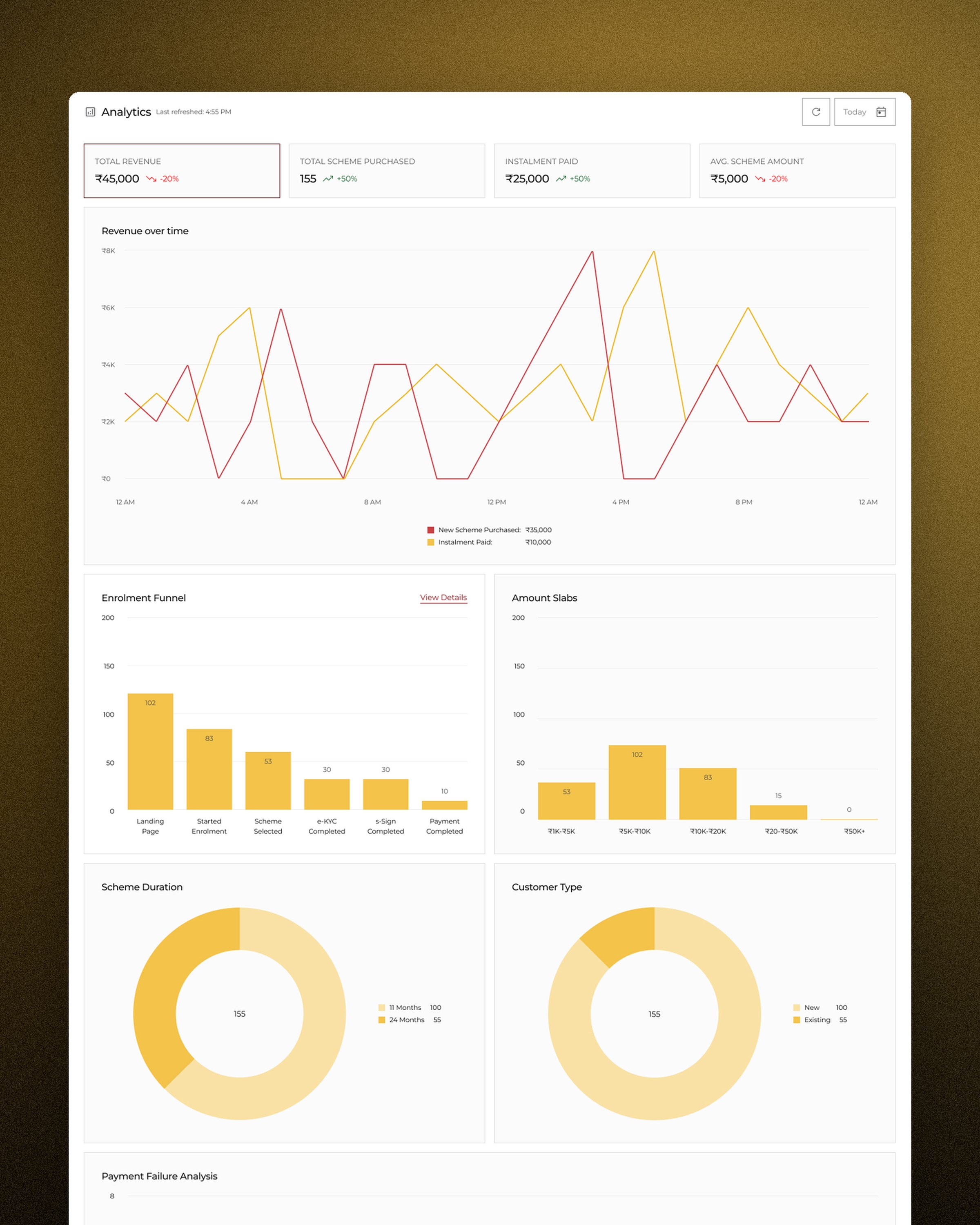
- You joined by walking into a shop
- Four teams held four half-pictures
- Decisions went to whoever spoke last
- Anyone with a phone can join
- One view everybody argues from
- Missed payments surface the same week
From inside the team I watched roadmap debates start from the funnel view instead of opinion. I saw that shift, I did not measure it.
What I'd do differently
Test the step you think is easy, and instrument the measurement tool itself from day one.
Two things, and the first one stings more. The 91% was not a discovery. It had been sitting in the scheme-selection screen since the day it shipped, and it took a dashboard built later to make anyone go and look. That page should have been put in front of a few strangers with a phone before a line of it was built.
The second is smaller and more awkward for someone who builds analytics. This dashboard has no instrumentation of its own: which cards get opened, by whom, before which decision, none of it is recorded. Usage analytics on the analytics would have turned the shift I watched into a number I could show. It is the first thing I would wire in next time.